Monday, 18 March 2013

Blast from the past

I was sorting through old notebooks today and found a little piece I'd written about AS. I'm not sure what prompted it, whether I was planning to send it to somebody (although who, I don't know) or whether something had just happened and I was feeling angry. It's pre-anti-TNF treatment, so some of it is slightly inaccurate now, but I thought I'd put it here for a (teeny-weeny) section of the world to see.


Sometimes it's easy to get bogged down in the detail. Take a look in an anatomy book and you'll see cervical, thoracic, lumbar, sacral and coccygeal vertebrae; bifid spinous and superior articular processes; sacral promontories and pedicles and foramen... but what it boils down to is this: spine. Men and women in the UK have back problems. Some are the result of bad posture or heavy lifting, some from accidents or previous illnesses, and some, like mine, are a little more mysterious.

I suffer from a condition known as ankylosing spondylitis, a type of arthritis, and it took me nearly long as it took to be diagnosed as it did to master the pronunciation (but not quite. I waited nine years to be told what the source of my pain was, and some wait even longer). AS (official shorthand, not just laziness) is an autoimmune disease, which may be triggered by an injury, but as often as not seems to have no real environmental cause. Some AS-ers, including me, possess the gene HLA-B27, though a large number of people have the gene, but not AS. If there is a correlation between having both, it seems it might be that the gene codes the tumour necrosis factor white cells which attack any intruders. But in AS, they go a bit mad and attack any part of the body showing inflammation. Consequently, areas around the joints which become inflamed can fuse together. In the past, therefore, it was called “bamboo spine”, which sounds almost romantic. Personally, I think ouch-ouch-#?!@*-I-can't-move disease, while being distinctly less poetic, is probably more accurate.

As disabilities go, it's particularly difficult to pin down, which is ironic, seeing how slowly I move when I'm going through a bad patch. In the Top Trumps of Life, it scores fairly low, and means I don't get any DLA* or a blue badge to put in the car windscreen. Considering I can't drive anyway, the latter is no skin off my nose, but I am a student, and travelling to and from hospitals around the country can get a tad pricey, so DLA wouldn't go amiss. However, in the long term, even with physio and medication, you're pretty much destined to resemble Quasimodo for the rest of your life**. Now me, I've nothing against pavement-gazing, but I never signed up for it. Nor did I envisage a future of permanently bent knees***, and pain from sitting, standing or lying down. I really, really like sleeping.

So don't stand there and disbelieve me when I say I'm disabled****. Just  because I don't limp doesn't mean I've not known more pain that you ever will. And don't mock me when I do walk strangely. But most of all, don't ignore that twinge in your lower back, or those stabbings in your legs. Don't be fobbed off with “It's only growing pains”. Don't just gulp down ibruprofen like there's no tomorrow. Go to your GP and get referred to find out if there's something more serious going on. Use the NHS while you still can*****.


*you can actually get DLA in some instances. NASS are very good at supporting people with applications and helping obtain funding.
**I know now that this is actually unlikely, especially with anti-TNF treatment. Getting a hunchback is really rare, especially now that people are diagnosed and treated properly and quickly.
***some people have this, but again, see Quasimodo point above.
****I don't say this anymore, not even on those equal opportunities forms that come with job applications, which sometimes causes problems when Occupational Health come calling and want to know why you didn't declare it. 
*****Yup, they were still trying to wreck the NHS 3 years ago.

Friday, 8 March 2013

Definitely not eavesdropping

Some more London-centric language, this time on the bus. Imagine the scene...

A highly-pierced woman of about 17 at the front of the bus, shouting on her mobile and mouthing off about her pervert boss to a friend. This goes on for some time, and she gets more and more agitated. She pauses for a moment mid-rant and suddenly explodes:
"BIG MAN TING!!! Big man ting!"
I spent the rest of the journey wondering why she was yelling about giant male genitalia. It took Urban Dictionary to let me down gently and explain that "big man ting" is a phrase used to mean "in all seriousness" (see also: "you get me", "true say", "swear down").

Not to be confused with a big man's ting-a-ling (a giant male's genitalia), a big man, an' ting (a really really giant man), or ting-ting! which is your stop...

N.B just to make tings really confusing, big man ting can be used to mean what I first thought it meant... It seems only London, at the minute, uses it in the you-get-me sense.

Sunday, 3 March 2013

Pagan

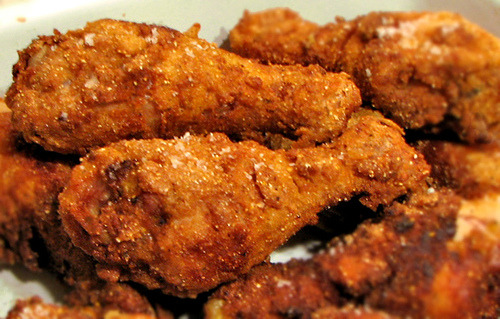
Channel 4's The Fried Chicken Shop: Life in a Day is a one-off documentary about a fried chicken franchise in Clapham. Over 24 hours they speak to the staff and customers as well as eavesdropping on their conversations. At one point, one of the kids from the local college says something like, "Don't be a pagan, pass the ketchup".
Exhibit A

It's been a fair while since I was last in contact with the real word(s) on the street, but now and again, a friend who is still in higher education brings me up to speed. It was from him that I first heard pagan  to describe someone who would grass you up or betray you quicker than you could say "follower of a nature-based religion". He said it doesn't just have to mean a two-faced snitch, it could just mean some kind of loser, and that seems to be the way it was used in the programme. The negative aspects of being a snitch have broadened to describe anyone acting in a negative way.

It seems that many of the people who use pagan in this new sense, however, are not really aware of its other connotations, so it's not clear exactly if this term is coincidentally the same as pagan in the sense of wicca, or if someone with a grudge against non-Abrahamic faiths decided to equate them. (the latter scenario might not be implausible: at school, where there were a lot of Muslims, infidel was a pretty bad word, as was heathen, so pagan isn't really that far off).

Friday, 1 March 2013

It's the century's remedy/For the faint at heart, a new start...

Over the weekends, visiting my sister at university, I got to stay in a 17th century thatched cottage with thick ochre-painted walls, sloping floors, exposed beams and a tiny staircase. I had not been so excited for a long, long time.
http://25.media.tumblr.com/tumblr_l0nyw9zEYs1qbrdf3o1_500.jpg
Apparently the countryside
has washing machines too these days.

For all my life, I've lived in a city. My idea of villages and country life is about 300 years out of date, having been gleaned from Alison Uttley books, Loreena McKennit songs and the Constable print that used to hang in my grandmother's toilet. The bemusing reality then was Tesco lightbulbs, pitbull terriers and perma-tanned women driving Nissan Micras at 100mph down high-hedged lanes.

I was sort of relieved to realise that the smell of manure is the same no matter what century it's being spread.